Available 5 Days A Week! 1-888-444-9994
Where's My Order?


MY CART (0)
Cart Subtotal:

The intent of this page is to answer any questions you have about lithium batteries for golf carts. To provide you with insights into the lithium advantage and why this is the time to change from using lead acid batteries. Should you have any additional questions or don’t want to read through all the information, we have a highly trained team available to answer any questions. You can reach them via phone here or provide your information for us to reach out to you.
A well-versed lithium battery US based phone representative is standing by to answer any of your questions: 1-888-444-9994
Topics we are going to cover:
Bullet point summary:
Battery technology has come a long way in recent years. Lithium batteries have become a very popular option with many different lithium options hitting the market recently. It is important to understand the differences in lithium chemistry AND technology built into each of these batteries.
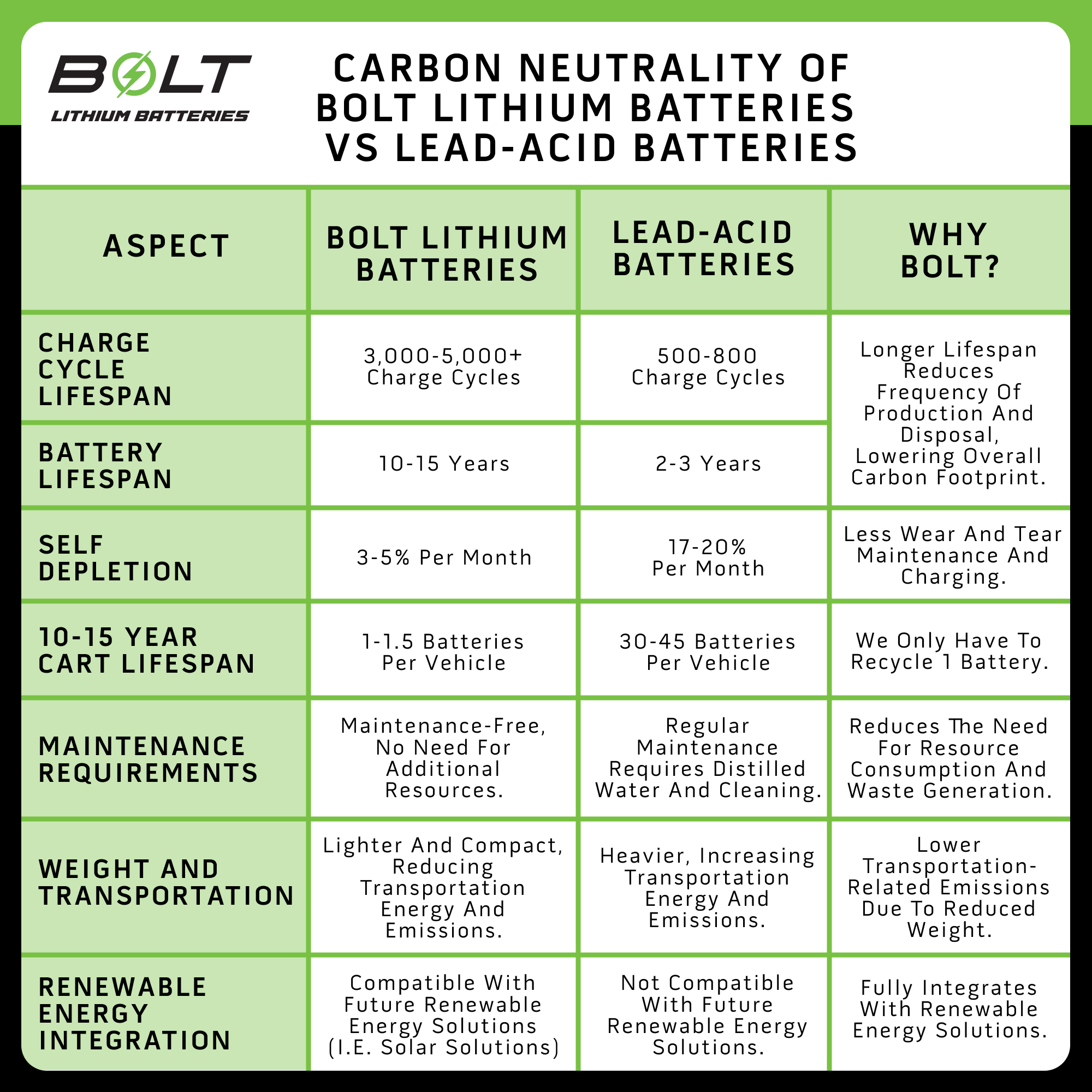
For the most part, once you have a good understanding of lithium batteries your primary questions come down to investment time frame. Lithium batteries last significantly longer than lead acid batteries. Depending on how much you get out of your lead acid batteries you will be replacing them between 2 to 5 times during the lifespan for a lithium battery. In terms of battery language, a lead acid battery gets between 300-500 charge cycles out of it while a lithium battery gets 3,000-5,000 charge cycles.
There are many benefits to lithium batteries vs lead acid batteries. For most people, the primary question comes down to having the expense up front in a lithium vs multiple expenses over time with lead acid. For most, the cost of lead acid replacements over the same lifespan of a lithium battery will be a larger expense than the lithium cost.
On top of the longer lifespan of a lithium battery they also have significantly less maintenance required. You won't have to add water on a regular basis, you won't have corrosive acid clean up or storage charging. Lithium batteries also have significant safety features built into their battery management system (BMS) that you won't find with a lead acid battery. Lithium batteries have a smaller footprint which allows for additional space under your seat, and they also weigh less.
We thought you'd never ask! Lithium batteries fully charge in less time than lead acid batteries AND they maintain their full storage capacity over 8 years while there is a massive 10-20% storage loss each year with lead acid batteries. You will be able to see estimated ranges per battery in the more detailed section about lithium batteries further down this page.
Still not convinced? Lithium batteries also have some environmental benefits because they last longer and are free from toxic chemicals.
Let's explore lithium batteries and their technology a bit further!
One of the main difference to lead acid batteries is that lithium batteries are not just a power source but also have a lot of technology and intelligence built into them that help manage your cart and the life of the battery. Next, we will cover components of a lithium battery and what differentiates Bolt Lithium batteries from others.

Construction:
The battery is inside a convenient and cleanly designed powder coated steel case. Bolt Energy Lithium Batteries come with a certified IP66 rating, something not all other brands can claim. Dust-Tight and protected and protected against high pressure jets of water. These batteries are suitable for most outdoor use.
Lithium Components:
There are many different lithium batteries and they are not all the same. For example lithium batteries in laptops and e-bikes use Lithium Polymer (LiPo) or Lithium Ion (Li-Ion) cells which are much more prone to swelling, overheating, and thermal runaway. Bolt Energy batteries exclusively use true Automotive-grade LiFePO4 cells, meaning they are EV-Certified and are the same grade used in EVs. The difference is significant: automotive-grade cells deliver superior cycle life, higher performance under load, and unmatched reliability. LiFePO4 cells are very stable and highly resistant to thermal runaway. Paired with additional safety measures we will go over later the Bolt Energy lithium batteries are considered to be very safe batteries.
LiFePO4 CELLS:
What is a heated lithium battery and why would I need one?
This is related to lithium battery properties and the temperature ranges they can operate in. Specifically this is related to the internal temperature of the battery at charging time. Normal operating temperature ranges for discharge for golf cart lithium batteries is -4 to 140 Fahrenheit. Charging operating ranges are bit more narrowed though and are from 30 – 140 Fahrenheit. That means the internal temperature of the battery has to be above 30F to safely charge. You can quickly see from the two ranges that one could theoretically discharge/draw from the battery below 30F without issues. When you put that battery in a golf cart though with regenerative braking the battery will want to charge while driving and if done in conditions that are outside of the charging range the cells can get damaged.
The solution?
Increase the ambient temperature inside the battery to maintain temperatures above 30F so that charging can still occur without damaging the cells. This feature is great for colder climates that see prolonged temperatures outside of the normal operating range.
The difference between a non-heated and a heated lithium battery is a heating element to keep the battery above 30F for charging purposes.
What makes Bolt Energy’s Lithium batteries so unique is the Battery Management System (BMS), the Controller Area Network (CAN) communication protocol, and the Over the Air (OTA) update capabilities. The BMS is the brains of the batteries, the physical construction and proprietary software managing the batteries is where you will find differences in lithium battery performance, besides the type of physical cells being used.

What does the BMS do?
The BMS has a lot of safety features built into it for battery management. Here is a list of features and what they do:
That’s a lot of features to ensure the battery is managed safely and gets the best performance for your usage.
Over the Air (OTA) updates:
Bolt Energy Battery BMS also have Bluetooth connectivity and real-time monitoring. This sets them apart as the owner of the battery can use their own Bolt Energy phone app and send battery information directly to Bolt to diagnose. Any updates can be send back to the owner and updated via Bluetooth. No hassle of coordinating with dealers to get your battery looked at and diagnosed.
What is the Controller Area Network (CAN) and what does it do?
The controller area network (CAN) is a communication protocol for the controller/motor, charger, and other accessories. By being CAN enabled the battery (BMS) communicates directly with the controller and motor. It can also communicate with the battery charger to best manage the charge cycles of the battery. This is an additional safety feature built in, the charger can adjust its output based on individual cells in the battery, not just the entire battery pack. CAN communication also allows the BMS to directly integrate into the cart’s drive system to manage battery draw as well as regeneration. The CAN network also allows for communication to certain OEM display screens.
The Phone App
Available for both Android and Apple systems in English and dual language switching. Go to the App store and install the “Bolt USA” app. You will be able to connect it to your battery via Bluetooth from as far as 32 feet away. You can read the voltage, SOC, battery history recordings, update your firmware and send data to e-mail or cloud servers for fast service.
What performance can I expect out of the lithium battery?
This is a science and an art, but we will answer this question by guiding you into the best battery option for your use and vehicle setup.
The first thing you should consider is if your cart is a 36V or 48V setup today. Depending on your voltage setup your controller and motor will have similar Voltage setups. You should choose a battery that supports that voltage so that you don’t have to upgrade your controller and motor. A 36V cart setup will take a 38V battery and a 48V setup will take a 51V battery. The 70V battery option may require an aftermarket controller upgrade.
The next decision is based on your vehicle configuration and your use case. You will want to size the right battery to your power demand to ensure you get the performance you are looking for from your power source. Things to consider here are 2,4, or 6 passenger vehicles, stock or lifted, size of your current controller, your gear ratio, and the terrain you drive on. To help with guiding you please see this fantastic selection chart with estimated ranges for each configuration and use case.
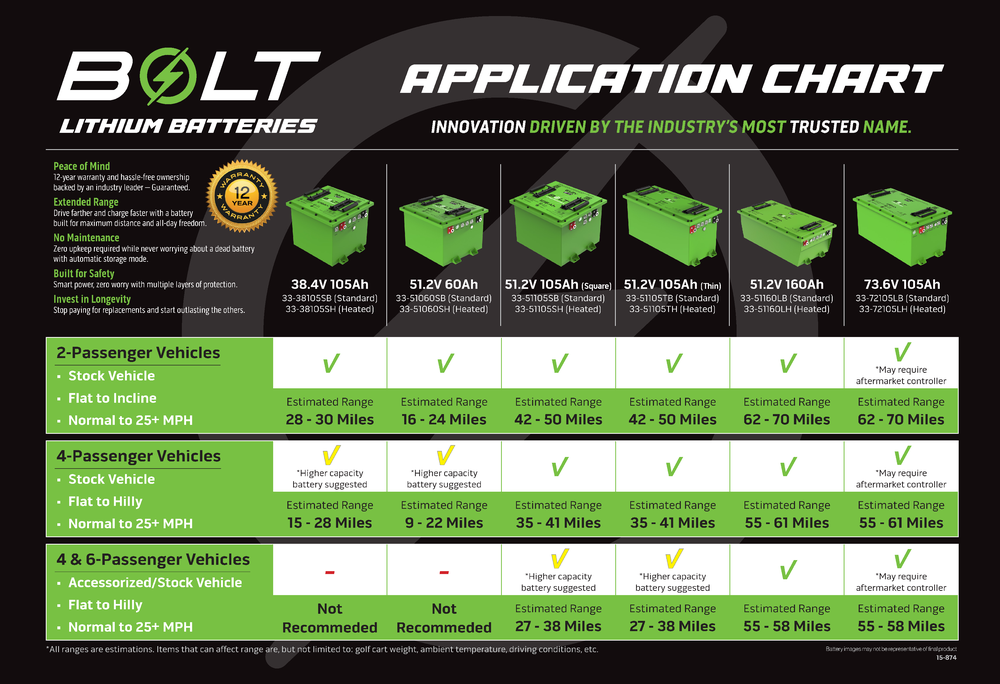
Some callouts for you regarding the information on this chart:
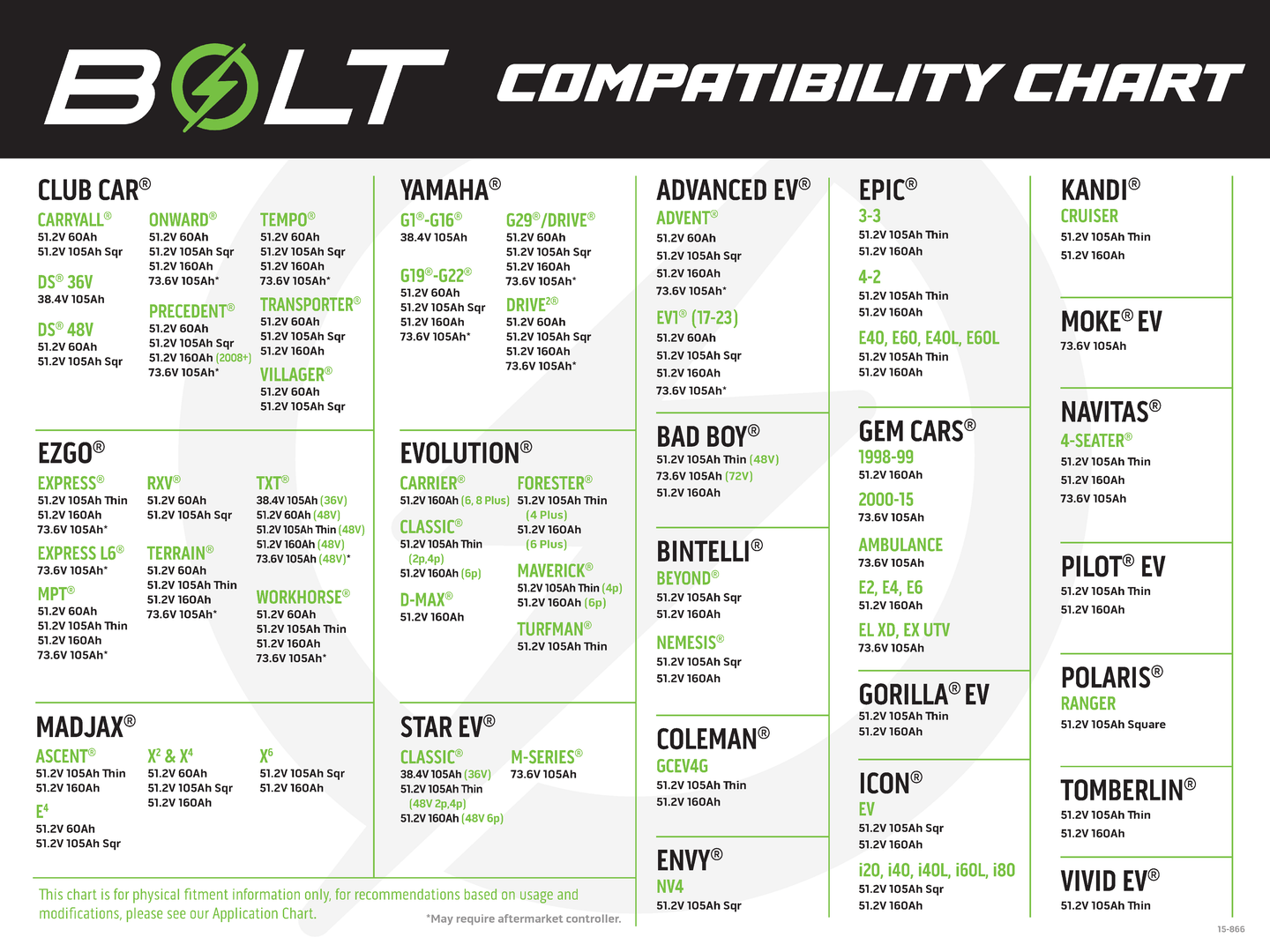
Once you have figured out which size battery you will want to purchase you can use the Make and Model selector on the battery page to find the bundle that best fits your vehicle.
What is included in a Lithium Conversion Kit?
Lithium conversion kits will have everything you need to convert your vehicle from lead acid to lithium. There are 4 components to each kit with the hardware required to secure the battery in the battery well changing depending on the vehicle make and model.
Components to a Lithium Conversion Kit:
Installation:
Installation is very simple, we always recommend you contact a licensed professional for any electrical installations or modifications. If you choose to install your new lithium battery, we highly recommend two-person installation and back braces. Safety glasses and chemical resistant gloves are a necessary safety precaution for any Battery installation.
You can find installation instructions with your battery delivery and can also find them online readily available for download. Physical installation is an easy 3 step process. Remove the old Lead Acid batteries, install the supplied mounting brackets and bolt your lithium battery onto the mounting plate. From there follow the wiring diagram to properly connect your battery to the charger, SOC meter, and cart controller.